Unraveling the Parental Roots of Tennis Sensation Jannik Sinner

Wendy Hubner 1149 views

Unraveling the Parental Roots of Tennis Sensation Jannik Sinner

The world of tennis has witnessed a plethora of talented players who have risen to the top, mesmerizing audiences with their exceptional skills and determination. Among them is Jannik Sinner, the young Italian tennis sensation who has taken the tennis world by storm. Born on August 16, 2001, in San Candido, Italy, Sinner's journey to the top is not only a result of his own hard work but also the guiding force of his family, specifically his parents. In this article, we delve into the fascinating story of Jannik Sinner's parents, exploring their nationality, their significant contributions to his tennis career, and the values they instilled in him.

Jannik Sinner's parents, Sergio and Tina, are a crucial part of his success story. Sergio, a former tennis player himself, met Tina, a talented skier, at a sporting event. Their union not only produced an exceptionally gifted son but also instilled in Jannik a passion for sports from a young age. Born into a family of sports enthusiasts, Jannik's parents recognized his aptitude for tennis at a very early stage and took proactive measures to encourage his growth in the sport.

From Italy to the World Stage

Sinner's parents, being Italian, could not have possibly known that their son would go on to become a professional tennis player and climb the ranks of the world's top 100 players. "Italian heritage plays a significant role in shaping our family's values and upbringing," said Sergio Sinner in an interview with ITF Tennis. "Growing up, we never thought of our children's potential as just playing a sport, but rather as a way of living – respect, discipline, and a growth mindset."

The Sinner family's Italian roots not only provided a foundation for Jannik's early life but also introduced him to the rich tennis history and culture that has shaped Italy's iconic athletes. "My parents never pushed me, but rather guided me," Jannik reflected in an interview with La Repubblica. "I think that's why I have been able to enjoy this journey so much."

Early Years and Training in Italy

As Jannik's potential as a tennis player became evident, his parents carefully crafted an environment that would nurture his talent. They sent him to train at the Amoret Tournament in Lichtenburg, Austria, and later enrolled him in the TP Lotto di Fiumicino Academy in Rome. These early training periods laid the foundation for Jannik's strong work ethic and instructed him on how to overcome the mental barriers he would encounter on the court.

Regardless of Italy's rich sports culture, Sinner's family's effort and sacrifices contributed significantly to his early exposure to world-class tennis training. "Being Italian allowed us to maintain our warm-up routine and field him company," said Sergio Sinner. "Never could we have imagined he'd make such strides in the professional circuit already, but supporting every step of the way has been enriching for both of us and Jannik as well."
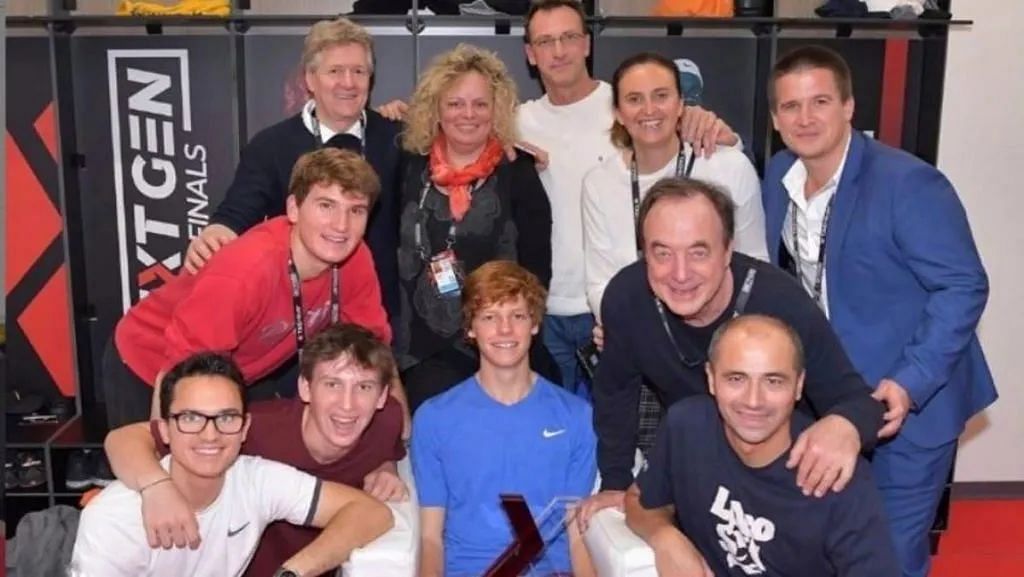
Who Are Jannik Sinner's Parents? Age, Nationality & More
Jannik Sinner Age: How Old Is This Tennis Sensation? - Biowiki
Jannik Sinner parents: A look into the Italian star's family - Media ...

Winona Ryder's Ageless Charm: Unpacking Her Iconic Role in Bram Stoker's Dracula</h3><p>In 1992, Winona Ryder reprised her breakout role as Mina Harker in Francis Ford Coppola's adaptation of Bram Stoker's Dracula, cementing her status as a Hollywood leading lady. In this article, we'll delve into the making of this iconic film, exploring the intricacies of Ryder's portrayal of Mina and the ways in which it showcases her ageless talent.</p><p>Winona Ryder's casting as Mina Harker in Bram Stoker's Dracula was a pivotal moment in the film's production. Ryder, who was in her mid-twenties at the time, brought a youthful energy to the role, which offset the more mature performances of the film's other lead actors, including Gary Oldman and Anthony Hopkins. As Ryder herself notes, "I was so young, and I was playing a character who was kind of an innocent, and I think that's what made her so compelling."</p><p>Coppola, who has long been a supporter of Ryder's work, saw in her a unique talent that would bring depth and nuance to the character of Mina. "Winona had a sense of vulnerability and fragility that was perfect for the role," Coppola recalled in an interview. "She was able to convey the character's emotions in a way that was both subtle and powerful."</p><p>One of the key aspects of Ryder's performance in Bram Stoker's Dracula is her ability to convey the complexities of Mina's character. On the surface, Mina appears to be a traditional Victorian-era wife, devoted to her husband and lacking in assertiveness. However, as the film progresses, it becomes clear that Mina is a strong-willed and independent individual, capable of withstanding the pressures of the supernatural forces that surround her.</p><p>Ryder's portrayal of Mina is characterized by a mix of fragility and determination. Her character's emotional vulnerability is palpable, particularly in the film's iconic scenes, such as the scene in which Mina is trapped in the snake scene with the vampire. At the same time, Mina shows remarkable resilience and strength in the face of adversity, refusing to give in to the forces of darkness that seek to consume her.</p><p>Bulleted points of critical acclaim:</p><p>• Ryder received wide praise for her performance, with many critics noting her ability to bring depth and nuance to the character of Mina.</p><p>• The film's use of sensual imagery and visual metaphors added to Ryder's performance, creating a dreamlike quality that drew audiences into Mina's world.</p><p>• Coppola's direction of the film was widely praised, with many critics noting his ability to create a sense of tension and foreboding that was both suspenseful and atmospheric.</p><h2>Behind the Scenes of Bram Stoker's Dracula</h3><p>The making of Bram Stoker's Dracula was a complex and often challenging process. Coppola, who had previously helmed films such as The Godfather and Apocalypse Now, was determined to create a film that would be both faithful to the original novel and innovative in its approach. As he notes, "I wanted to create a film that would be a metaphor for the vampire's victims – people who are trapped in their own lives, struggling to find freedom and release."</p><p>Coppola's vision for the film was shaped by his own experiences growing up in a family of artists. "I grew up surrounded by art and music, and I think that's where my love of storytelling comes from," Coppola explained. "I wanted to create a film that would be a hybrid of art and film, something that would be both beautiful and terrifying."</p><p>The film's production was marked by intense collaboration between Coppola and his cast and crew. As Ryder recalls, "Francis is an incredibly talented and intense director, and he demands a lot from his actors. But at the same time, he's also incredibly generous and supportive – he wants to bring out the best in everyone."</p><h3>Impact and Legacy of Bram Stoker's Dracula</3><p>Bram Stoker's Dracula was released in 1992 to widespread critical acclaim. The film grossed over $215 million at the box office and won several awards, including an Academy Award for Best Costume Design.</p><p>However, the film's impact went far beyond its commercial success. As a film, Bram Stoker's Dracula redefined the boundaries of cinematic horror, pushing the genre in new and innovative ways. As a performance, Ryder's portrayal of Mina Harker set a new standard for actresses in the genre, demonstrating a depth and nuance that was both captivating and inspiring.</p><p>Today, Bram Stoker's Dracula remains a cult classic, widely regarded as one of the greatest horror films of all time. As Ryder notes, "I feel incredibly fortunate to have been a part of something that has had such a lasting impact on audiences and the film industry as a whole."</p><p>The lasting impact of Bram Stoker's Dracula can be seen in the many filmmakers and actors who have been influenced by Coppola's vision and Ryder's performance. As one film critic noted, "Bram Stoker's Dracula is a film that has stood the test of time – its themes of love, death, and the supernatural continue to captivate audiences to this day."</p><h1>Conclusion: Winona Ryder's Ageless Charm in Bram Stoker's Dracula